Modern Classics of Japanese: A Summary
The nine scholars set on one timeline of lifespans and main works, and reread along four threads: sound, grammar, words, and the task of "kokugo." What each answer left, what was rewritten, what was never proved — and what this group of features has not read.
Reading "Modern Classics of Japanese" as One Line — A Timeline of Nine Scholars, and the Questions They Share
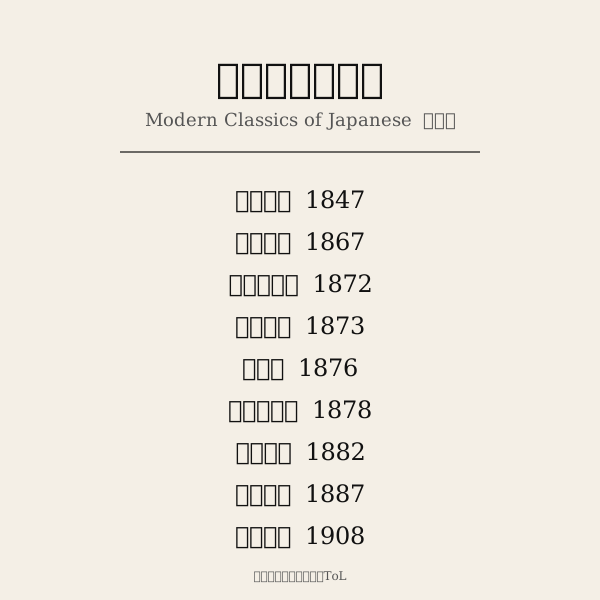
Ōtsuki Fumihiko, Ueda Kazutoshi, Kanazawa Shōzaburō, Yamada Yoshio, Shinmura Izuru, Matsushita Daizaburō, Hashimoto Shinkichi, Orikuchi Shinobu, Arisaka Hideyo. In nine features we read each one's main work in the original. In this article we set the nine on one timeline by lifespan and publication year, and sort them into four threads: sound, grammar, words, and "kokugo."
The Sound Thread — P, Two Kinds of Kana, and "What Is a Sound?"
Ueda Kazutoshi reasoned, from a small fact of modern Japanese, that the ha-row was once P. Hashimoto Shinkichi confirmed that Nara-period man'yōgana were written in two distinct groups. Arisaka Hideyo closed in on what those two were, and then asked "what is a sound?" We line the three up by the kind of evidence.
The Grammar Thread — Parts of Speech, Predication, Bunsetsu, and "Parts"
How did four scholars cut the one sentence "Hana ga saku," and what did each try to explain? Ōtsuki Fumihiko's parts of speech, Yamada Yoshio's predication, Hashimoto Shinkichi's bunsetsu, Matsushita Daizaburō's words and elements. Different units and different questions are applied to the same Japanese sentence.
The Word Thread — Dictionaries, Etymology, and Ways of Reading Words
The origins of words: Ōtsuki Fumihiko sought them in dictionary definitions, Shinmura Izuru in documentary evidence, Kanazawa Shōzaburō in comparison with other languages, Orikuchi Shinobu in the life and beliefs of the ancients. The same "etymology" has four ways of being checked — and the answers met different fates.
"Kokugo" as a Task, and the Limits of This Group of Features
The work of the nine was done under the word "kokugo" (the national language). That word was at times tied to politics. We look back at Ueda Kazutoshi's "Kokugo to kokka to" and Kanazawa Shōzaburō's "Chōsen ni okeru kokugo mondai," separating the words of the time from later assessment. And we write down, honestly, what this group of features has not read.