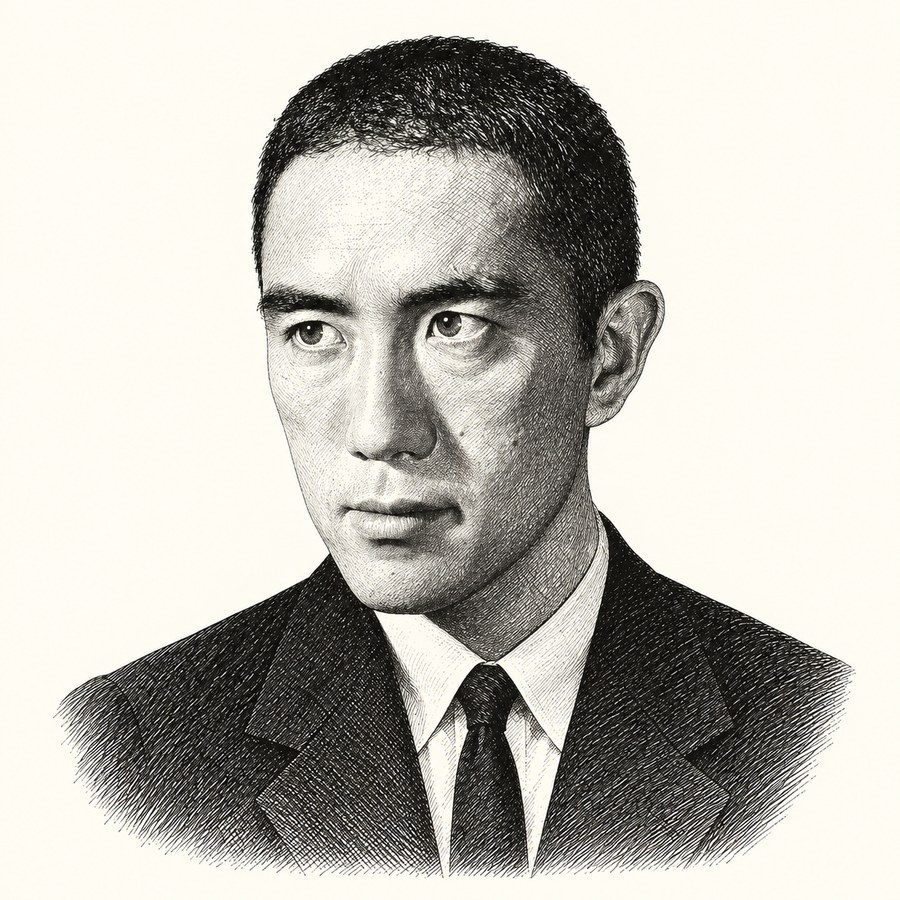
Bunshō Tokuhon 4: Technique
Proper names and the paradox of physical description. Japanese writers, peerless at landscape. "Action is grasped from outside; the actor themself knows nothing of it." Reading Chapter 7, "Technique" — at 31,000 characters, the longest chapter in the book — in the original.
Reading "Technique" — Looks, Nature, Psychology, Action, and Grammar
The longest chapter in the book, at roughly 31,000 characters. Yukio Mishima works through four kinds of description — physical appearance and clothing, nature, psychology, action — and a grammatical question about person. A map of Chapter 7.
"That Guy, You Know" — Proper Names and the Secret of Physical Description
When we forget someone's name, we say: "that guy, you know, the fat one with the eyes like an elephant." Yukio Mishima builds an argument about proper names in fiction from this everyday fact. Why does describing a face in more and more detail leave it less and less visible?
A Country Where Nature Overwhelms the Human Figure — Two Specialties of Japanese Literature
In an Eastern world where there is no opposition between the human and the natural, landscape description has the power to overwhelm the human figure, Yukio Mishima says. And psychological description has been a specialty of Japanese literature since the women writers of the Heian court. Reading two "specialties."
The Actor Themself Knows Nothing — Action Description, and the Devices of Person
Action is grasped from outside; the actor themself knows nothing of it, and a third party is the one who observes it. Yukio Mishima takes up action description, the field that Japanese literature — so skilled at psychological description — handles worst of all, and closes the chapter with grammar closer to actual practice: person, and onomatopoeia.
Close Reading — The Battle on the Bridge in the Taiheiki: Prose That Moves on Verbs Alone
"Running back and forth." "Trodden underfoot." "Thrusting." Return to the original text of the Taiheiki passage Yukio Mishima quotes, and it holds almost no psychology, almost no feeling — only verbs, piling up one after another. Checking action description against the structure of a sentence.
Close Reading — "It Rang with a Tinkle": Why Is Ōgai's Onomatopoeia So Sparse?
The onomatopoeia of popular fiction pours out sensation without restraint — a clattering rattle, a shrill snap. Ōgai's onomatopoeia, by contrast, is held back, sparse. Reread the two styles Yukio Mishima sets against each other, along the thread of sight and sound running back to Chapter 2.
Verdict — Does Chapter 7's "Technique" Still Help a Writer Today?
Appearance, clothing, nature, psychology, action, grammar. Of the six technique arguments Yukio Mishima lines up, sort what can be checked against the original text from what remains Mishima's own private aesthetic.