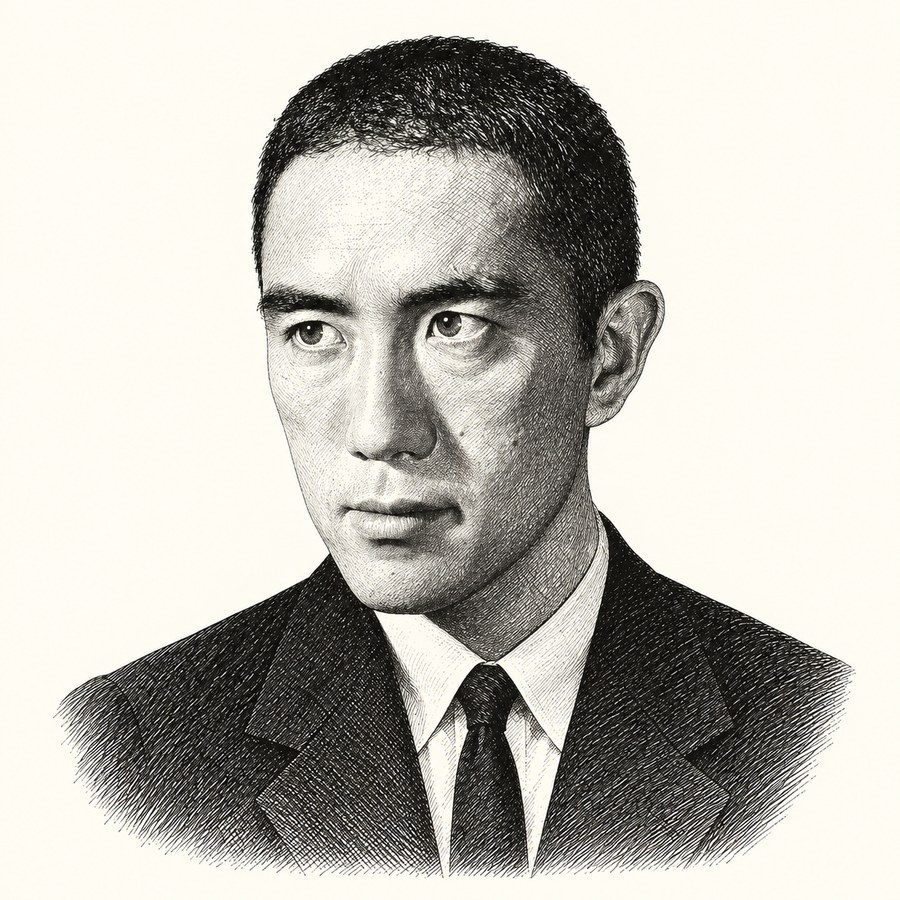
Bunshō Tokuhon 3: The Prose of Fiction
Ōgai's "the water came" and the flood of color in Izumi Kyōka. Apollonian prose and Dionysian prose. Why Ōgai never wrote a great long novel. And why the European-style "roman" was slow to appear in Japan. Reading Chapter 3, "The Prose of Fiction," in the original.
Reading "The Prose of Fiction" — Ōgai and Kyōka, Short and Long, Two Opposing Poles
The simplicity of Mori Ōgai, and the splendor of Izumi Kyōka. Mishima Yukio calls the two "Apollonian" and "Dionysian," and lays over them a second pair: short fiction and long fiction. A sketch of Chapter 3, "The Prose of Fiction," about 21,000 characters.
"The Water Came" — Ōgai's Simplicity and Kyōka's Splendor, Two Kinds of Models
"The water came" — five words in Japanese, and yet the secret of Ōgai's prose is packed into them, Mishima Yukio says. Izumi Kyōka's Nihonbashi stands at the opposite pole: a flood of color. Apollonian prose, and Dionysian prose. We read the opening of Chapter 3.
Why Didn't Ōgai Write a Great Long Novel? — The Peculiar Standing of the Japanese Short Story
Perhaps a very intellectual, very clear-minded person cannot write a great long work. Mishima Yukio calls Ōgai's Shibue Chūsai the longest of novels written "right at the edge" of a spare style. And he argues why the Japanese short story has come to occupy a place close to poetry in the West.
There Is No "Roman" Yet in Japan — In Search of a Style That Does Not Cling to Plot
A roman must be a complete synthesis of the masculine world of logic and the feminine world of passion. Mishima Yukio finds there the reason a European-style long novel was slow to appear in Japan. Through the "generous style" of Goethe, Balzac, and Dostoevsky, we read the conditions of the long novel.
Close Reading — "The Water Came." — Reading Ōgai's and Kyōka's Originals Side by Side
Mori Ōgai's Kanzan Jittoku and Izumi Kyōka's Nihonbashi. We return to the two passages Mishima Yukio contrasted and read them as originals in their own right, checking how far Mishima's analysis can be confirmed in the prose itself.
Close Reading — Why Does "Men's Script and Women's Script" Return in the Argument About the "Roman"?
"My reason for quoting these two at the outset was…" Near the end of Chapter 3, Mishima Yukio explains, once again, what he had been trying to do in this chapter. We check, in the original, how Chapter 2's argument was applied to the theory of the long novel.
Legacy and Verdict — Ōgai and Kyōka Are Still Invoked; "Japan Has No Roman" Was Reexamined
The contrast of Ōgai's simplicity and Kyōka's splendor remains a common reference point for talking about modern Japanese literature. Mishima's diagnosis that "Japan has no European-style roman," on the other hand, was greatly relativized by the later course of literary history. We grade the three sections of Chapter 3 separately.