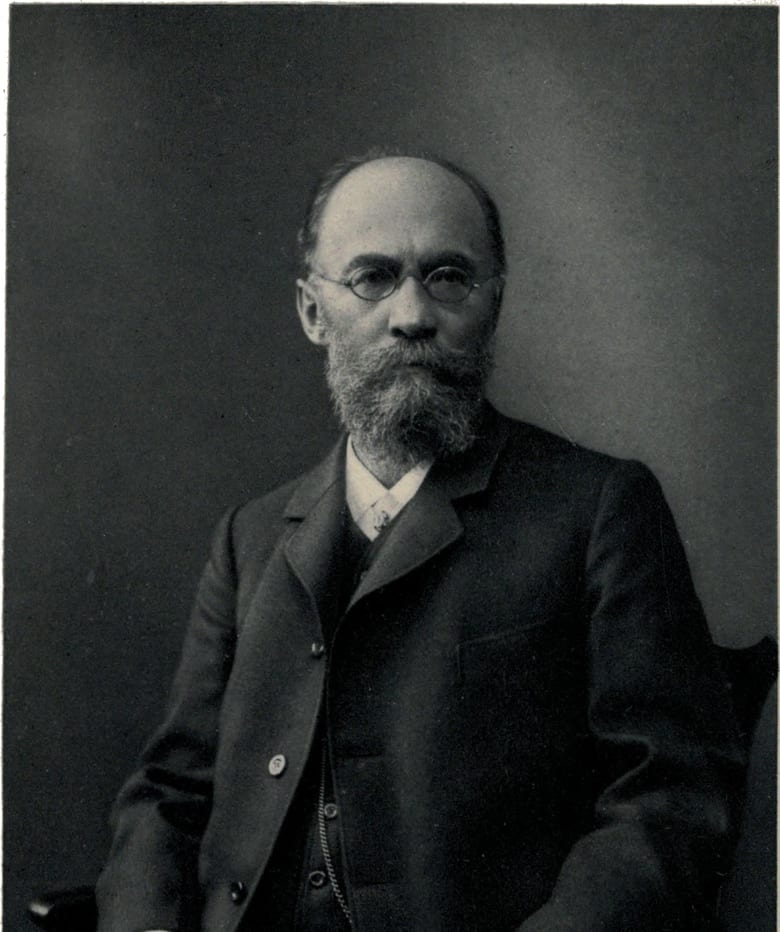
Karl Brugmann
Eighteen years after Schleicher's death, Karl Brugmann — a leading figure of the "Neogrammarians" — wrote a new textbook uniting Bopp's flowing narrative with Schleicher's orderly individual grammars. Reading the Grundriss, from the declaration that every exception has a reason, through the discovery of analogy, to the contemporary controversy with Hugo Schuchardt.
Reading Karl Brugmann's Grundriss (1886) — A Textbook for a Generation That Refused to Accept Exceptions
Eighteen years after Schleicher's death, a younger generation of linguists was no longer satisfied with his textbook. Fusing Bopp's flowing narrative with Schleicher's orderly individual grammars, while demanding a reason for every exception — reading the landmark work of the "Neogrammarians."
"Every Exception Has a Reason" — The One Attitude the Neogrammarians Changed
Earlier linguists tended to wave away exceptions they couldn't explain as "that's just how it is." Brugmann's generation refused to accept that. Scholarship's work isn't finished, they insisted, until the why is found.
Analogy — How a Child's Mistake Can Rewrite the History of a Language
A child who says "goed" instead of "went." An adult who says "snuck" instead of "sneaked." Is this just a mistake, or a force language already carries within it? The other engine of change the Neogrammarians placed alongside sound law.
Close Reading — A Manifesto Carried in a Single Footnote
In the preface to the Grundriss, not in the main text but in a single footnote, Brugmann wrote down his generation's whole attitude: scholarship's task isn't finished until the answer to "why" is found. Read in the original German.
Close Reading — "A Middle Course Between Bopp and Schleicher": Brugmann Places Himself
Where does his own book stand? In the preface, Brugmann says so plainly, naming his predecessors by name. His assessment of Schleicher's Compendium, and what he was aiming for in his own method. Read in the original German.
Legacy and Controversy — Inheriting from Bopp and Schleicher, Challenged by Schuchardt
Just a year before the Grundriss was published, one scholar had already written a challenge titled "Against the Sound Laws: Against the Neogrammarians." How does Brugmann's generation connect to Bopp and Schleicher, already covered in this feature set — and who was attacking them at the very same moment?
Verdict — How Brugmann's Grundriss Looks From Nearly 140 Years Later
The attitude that every exception has a reason, and the discovery of analogy — both remain foundational to historical linguistics today. But the strong claim that sound laws operate without exception was rewritten, after Schuchardt's rebuttal, into something more cautious. The closing chapter of an eight-feature history series.