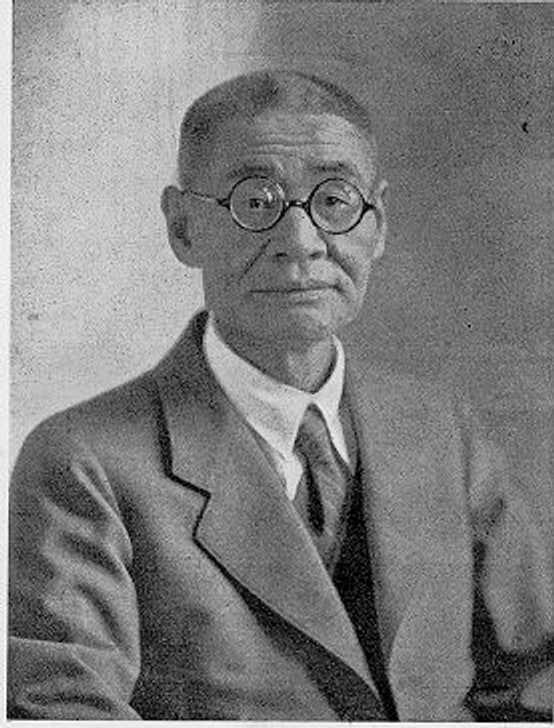
Hashimoto Shinkichi
Cutting a sentence where it naturally breaks when spoken — the "bunsetsu" — and the discovery that Nara-period man'yōgana were strictly sorted into two groups. Hashimoto Shinkichi piled up "checkable facts" on both the present and the past sides of Japanese. Reading Shin Bunten Bekki (1935) and Kodai Kokugo no On'in ni Tsuite (1942).
Reading Hashimoto Shinkichi — Two Discoveries, "Bunsetsu" and Old Japanese Kana Usage, That Changed How Japanese Looks
The grammar taught in Japanese schools, which cuts sentences into "bunsetsu," and the discovery that Nara-period Japanese distinguished more sounds than modern Japanese does. Hashimoto Shinkichi (1882–1945) rewrote the picture of Japanese in two entirely separate places. The primary texts: Shin Bunten Bekki (1935) and Kodai Kokugo no On'in ni Tsuite (1942).
What Is a Bunsetsu? — Cut a Sentence Where It Naturally Breaks, and Japanese's Skeleton Shows
"Watashi wa kinō toshokan de hon o karita." How many chunks is this sentence built from? Test by inserting "ne," and you can see the parts a Japanese sentence is made of. A jargon-free introduction to the base of school grammar, built by Hashimoto Shinkichi.
What Is Old Japanese Kana Usage? — Nara-Period Speakers Told Apart Two Sounds We Now Hear as One "ki"
The "ki" of yuki (snow) and the "ki" of tsuki (moon) are never written with the same Chinese character in Nara-period books. A sound modern speakers hear as one was clearly two in Japanese 1,300 years ago. A jargon-free introduction to the discovery that dug a vanished sound distinction back out of the way characters were used.
Close Reading — "You Never Cut Between Them" — The Independent/Attached Distinction Beneath the Bunsetsu
The bunsetsu of school grammar begins where Hashimoto Shinkichi sorted words into "independent words" and "attached words." The criterion isn't meaning but whether, when spoken aloud, you can put a break between them. Reading the first chapter of Shin Bunten Bekki, Jōkyū-yō (1935) in the original.
Close Reading — "Truly Unexpected" — How the Two Groups of Man'yōgana Were Found
Hashimoto Shinkichi didn't claim this discovery as his alone. An Edo scholar named Ishizuka Tatsumaro's buried manuscript, Motoori Norinaga's observation, and Hashimoto's own systematizing. Reading the lecture record Kodai Kokugo no On'in ni Tsuite (1942) in the order the discovery piled up.
Legacy — The Bunsetsu That Became the Base of School Grammar, and the Eight Vowels Handed to Arisaka Hideyo
Hashimoto Shinkichi's two works went entirely different ways afterward. The bunsetsu took wide root as a vocabulary for teaching Japanese in classrooms. Old Japanese kana usage, in the hands of younger researchers, grew into a large hypothesis: that Nara-period Japanese had eight vowels.
Verdict — How Much of Hashimoto Shinkichi's Two Discoveries Is Still Alive?
Old Japanese kana usage is an unshaken premise of ancient-Japanese research today. The bunsetsu, meanwhile, is indispensable in the classroom but isn't regarded as an all-purpose unit in research. Two works of one scholar receive entirely different assessments.